Best practices for implementing AI Automation For B2B in your company
The Future of B2B: Using AI Automation to Drive Success
The landscape of B2B is moving as firms progressively transform to AI automation for strategic advantage. This makeover promises to enhance performance and consumer interaction with innovative technologies. The combination of these tools is not without its obstacles. Recognizing how services can browse this advancing surface will certainly be essential for future success. What elements will figure out the performance of AI in this field? The answers may redefine traditional company designs.
Comprehending AI Automation in B2B
As services progressively look for effectiveness, comprehending AI automation in B2B ends up being necessary. Growth Systems For B2B. AI automation refers to the use of expert system technologies to streamline and enhance company processes. In the B2B industry, this involves the integration of AI devices to take care of jobs such as data analysis, consumer communications, and supply chain procedures. By leveraging device knowing and natural language handling, firms can enhance precision, minimize human mistake, and speed up decision-making. In addition, AI automation helps with the handling of huge quantities of information, enabling businesses to extract important insights and optimize their operations. As companies navigate this technical landscape, a comprehensive grip of AI automation's capacities will certainly empower them to stay affordable and responsive to market needs
Key Advantages of AI Automation for Companies
While many services grapple with boosting functional demands, AI automation offers various advantages that can significantly boost their performance. One substantial benefit is efficiency; AI systems can execute repetitive jobs much faster and with higher precision than humans, consequently freeing and decreasing mistakes up staff members for even more strategic efforts. In addition, AI automation makes it possible for data-driven decision-making by evaluating huge datasets promptly, giving insights that inform company methods. Expense decrease is an additional vital advantage, as automation minimizes labor costs and enhances resource allotment. AI can improve scalability, permitting services to adjust to market modifications quickly. Eventually, the combination of AI automation promotes advancement, making it possible for firms to continue to be affordable in a quickly developing landscape.
Transforming Customer Experiences With AI
AI is improving consumer experiences by allowing individualized interactions and improving engagement. Via the execution of predictive analytics, companies can anticipate consumer requirements and preferences, bring about a lot more tailored solutions. Furthermore, streamlining assistance processes with AI modern technology enhances efficiency and satisfaction, inevitably transforming the total client trip.
Customized Communications and Interaction
Predictive Analytics Application
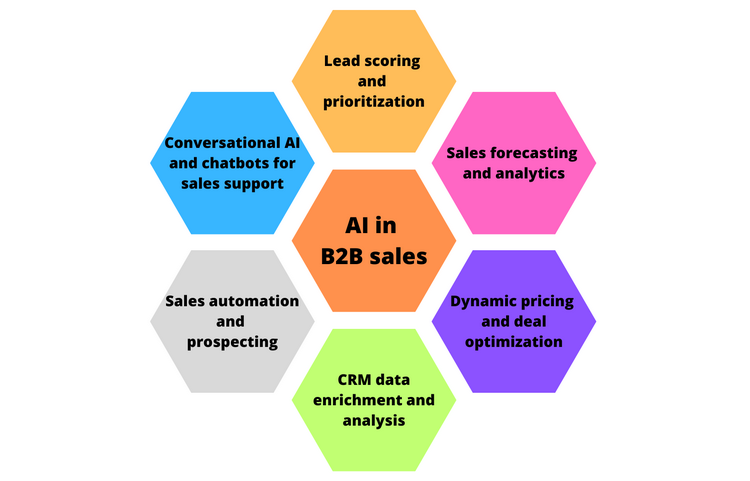
As companies progressively seek to enhance customer experiences, applying anticipating analytics has become a critical technique in the B2B sector. By leveraging data-driven insights, companies can expect client needs and preferences, allowing them to customize their offerings extra properly. Anticipating analytics uses advanced algorithms and historic information to forecast future behaviors, allowing organizations to determine prospective challenges and possibilities. This aggressive technique not only boosts consumer complete satisfaction yet additionally fosters commitment by providing prompt and appropriate remedies. Furthermore, anticipating analytics helps in source allocation, making sure that marketing initiatives are focused on high-value prospects. Eventually, the assimilation of predictive analytics furnishes B2B companies with the devices essential to transform client interactions and drive long-term success in a significantly competitive landscape.
Simplifying Support Processes
Enhancing client experiences in the B2B sector prolongs past anticipating analytics; streamlining support procedures plays an important function. By incorporating AI-driven solutions, companies can automate regular inquiries and improve reaction times, causing enhanced consumer complete satisfaction. Chatbots and online aides give 24/7 assistance, addressing client needs quickly and minimizing the problem on human representatives. This automation permits groups to concentrate on intricate concerns, cultivating even more purposeful communications. AI devices can analyze support data to determine patterns and locations for enhancement, making sure continual improvement of solution top quality. As companies take on these modern technologies, they place themselves as customer-centric and receptive, inevitably driving commitment and organization development in a significantly affordable landscape
Enhancing Procedures and Processes
Simplifying operations and procedures in B2B atmospheres is crucial for boosting overall effectiveness. By enhancing workflow effectiveness and automating routine jobs, organizations can reduce hand-operated mistakes and maximize beneficial sources. This shift not just boosts performance but also makes it possible for teams to focus on strategic efforts that drive growth.
Optimizing Process Effectiveness
Maximizing process effectiveness is vital for services seeking to boost and reduce operational prices productivity. By assessing existing processes, organizations can recognize bottlenecks and redundancies that impede efficiency. Implementing streamlined treatments enhances communication and cooperation amongst teams, making sure that jobs are completed a lot more promptly. Utilizing data-driven insights allows firms to make enlightened decisions that fine-tune procedures better. Additionally, adopting incorporated modern technologies can facilitate smooth details circulation, lessening the risk of hold-ups and errors. As companies accept these modifications, they not just foster a much more agile work environment however also place themselves to react rapidly to market needs. Ultimately, concentrating on process performance permits companies to designate sources properly, driving lasting success in a significantly affordable landscape.
Automating Regular Jobs
Several companies are significantly transforming to automation to handle routine tasks, recognizing its possible to substantially boost operational efficiency. By releasing AI-driven remedies, business can improve repeated activities such as data access, Click This Link billing handling, and customer inquiries. This change not just decreases human error yet additionally releases up beneficial staff member time, enabling staff to focus on strategic campaigns and value-added tasks. Additionally, automation can boost action times and service uniformity, bring about boosted customer satisfaction. As organizations navigate an affordable landscape, leveraging automation for regular tasks ends up being vital for maintaining and enhancing workflows agility. Inevitably, this method fosters technology and drives growth, positioning companies for long-term success in the progressing B2B environment.
Enhancing Decision-Making Via Data Insights
As services browse an increasingly complex landscape, leveraging data insights ends up being essential for educated decision-making. Minarik AI. By making use of ai-driven tools and advanced analytics, companies can transform raw information right into actionable knowledge. This enables them to recognize trends, projection market changes, and enhance approaches based on real-time details. Enhanced decision-making procedures depend on data visualization strategies, allowing stakeholders to conveniently make and analyze complex datasets swift, evidence-based options. In addition, insights originated from customer habits and market dynamics empower business to customize their offerings, boosting customer fulfillment and driving growth. Eventually, using information insights not only enhances decision-making effectiveness yet also positions companies to stay affordable in a rapidly progressing market
Getting Over Obstacles in AI Execution
Although AI implementation holds the pledge of substantial functional renovations, companies often face a myriad of difficulties that can impede development. Key obstacles consist of information high quality issues, as many enterprises struggle with incomplete or irregular datasets essential for reliable AI training. In addition, resistance to alter within the workforce can restrain the fostering of AI innovations, as workers may be afraid task variation or do not have the required skills. Spending plan restrictions also offer a difficulty, limiting investment in the called for facilities and ability. Additionally, integrating AI systems with existing procedures can be intricate, requiring considerable time and resources. Overcoming these difficulties requires a strategic technique that includes detailed training, change monitoring, and a commitment to constant renovation in AI initiatives
Future Fads: The Next Frontier in B2B Automation
While the landscape of B2B automation continues to advance, emerging patterns are positioned to redefine how organizations run. The assimilation of sophisticated man-made knowledge will assist in extra personalized client experiences, permitting companies to customize remedies precisely to client requirements. The increase of predictive analytics will certainly make it possible for companies to anticipate market shifts and enhance decision-making procedures. Automation of regular jobs via robot procedure automation (RPA) will certainly boost performance, decreasing operational expenses significantly. Furthermore, the fostering of blockchain innovation assures boosted openness and protection in purchases. As these technologies gain traction, firms will significantly utilize AI-driven understandings to promote cooperation, enhance supply chains, and improve general efficiency, marking a transformative shift in the B2B landscape.
Frequently Asked Questions
What Kinds of Businesses Can Benefit A Lot Of From AI Automation?
How Can Local Business Implement AI Automation Successfully?
Small organizations can execute AI automation properly by determining recurring tasks, picking user-friendly devices, ensuring appropriate training for employees, and slowly incorporating services to maximize workflows while keeping an eye on performance and changing approaches based on comments.
What Are Usual Mistaken Beliefs Concerning AI in B2B?
Common mistaken beliefs concerning AI in B2B include the belief that it is just for huge ventures, that it guarantees immediate outcomes, which it can totally replace human decision-making as opposed to enhancing it.
Exactly How Does AI Automation Influence Staff Member Roles and Job Safety?
AI automation improves staff member duties by streamlining repeated jobs, cultivating performance and innovation. While some worry task loss, it commonly develops possibilities for upskilling and brand-new placements, inevitably enhancing job safety via included value and productivity.
What Skills Are Required to Handle AI Automation Projects?
To handle AI automation tasks, people require solid logical skills, task management experience, effectiveness in information analysis, understanding of artificial intelligence ideas, effective communication capacities, and versatility to swiftly transforming technological environments. These skills assure successful implementation.
As businesses significantly look for effectiveness, understanding AI automation in B2B comes to be necessary. AI automation assists in the handling of large quantities of information, enabling organizations to draw out important understandings and enhance their operations. While lots of companies grapple with increasing functional demands, AI automation presents countless benefits that can significantly enhance their efficiency. Automation of routine jobs with robotic procedure automation (RPA) will certainly improve performance, minimizing functional costs substantially - Minarik AI. Manufacturing, logistics, and customer solution businesses can benefit most from AI automation